

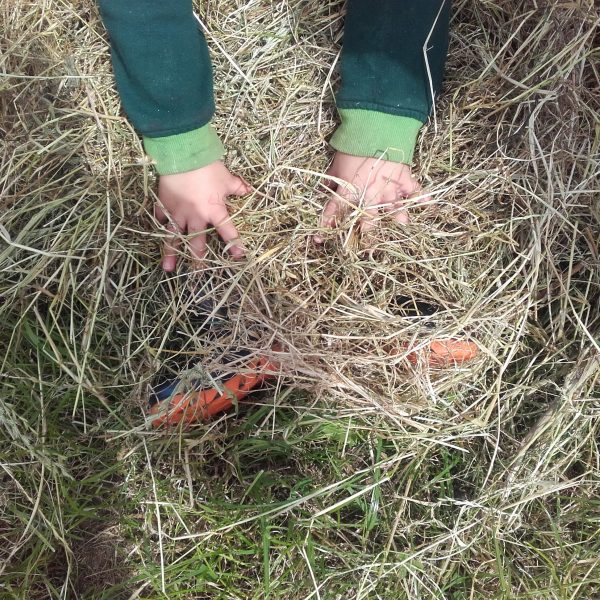
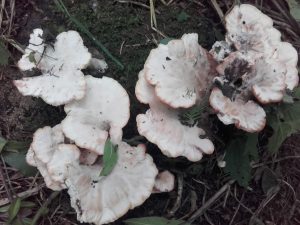
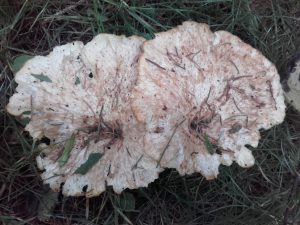
The children from Sedgeberrow Playgroup have grown in confidence over the last few weeks which has been really lovely to see. This morning they remembered all the health and safety points of being on a farm, which we have previously discussed. We also had a look in the wood at the ‘bird’ cherries which are now dropping off the trees and the mushrooms and fungus growing on the woodland floor. The children learnt to look but not to touch. They also learnt how to climb a stile safely.
After snack the children went off into the wood armed with a magnifying glass and bug pot. They were brilliant at finding lots of different minibeasts which they took great delight in showing us. Just before lunch the children helped clean the rubber ducks and then swam the ducks in the paddling pool, whilst others dug for fossils in the sand box.
After lunch we had a walk in a freshly silaged field. Stood by the pylon we listened to the buzzing of the electricity flowing in the wires overhead. The children found some hay and did unprompted role playing of chicks in a nest and cows being fed by a farmer.
After a busy day the children finished with a play in the wood.
The Year 5 children from Bengeworth Academy came out to the farm today. They were a real pleasure to have on the farm, their listening ears were well and truly turned on and they asked some brilliant questions. After the Health and Safety talk I explained the system we run within the business. The milking cows are at the home farm, the male calves are at Sandfield Farm and the female calves at Battledene Farm. I explained the difference between beef and dairy cows and that cows have to have a calf in order the produce milk. We had a brief discussion about the use of dairy bulls and beef bulls and over their snack time the children looked at the various ‘daughter’ traits recorded in a bull semen catalogue. The children were telling me the scores for udder placement, feet condition and speed of milking. The dairy genetics industry is huge and an essential part of the dairy industry.
After snack we went on a farm walk, first stopping to look at the male calves and identifying which calf had a dairy bull father and which had a beef bull father. We then walked along the tramlines in field of wheat. As we went into the wheat field the children thought about the life cycle of a wheat plant.
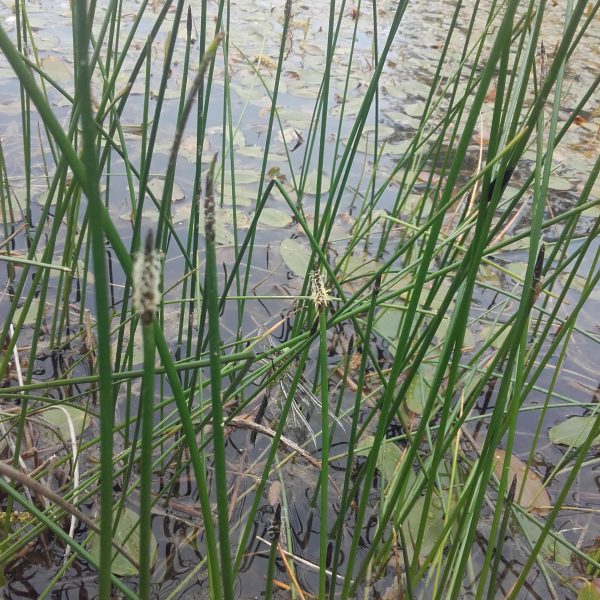
Once we were at the pond, the children had a great time pond dipping looking for dragon fly nymphs in particular. We were really lucky that a boy found a recently emerged dragon fly on the reeds, which was drying its wings in the sunshine, before taking its first flight.
On our way back from the pond the children looked at the wild life area, where I explained that some of the plants life cycles would be altered due to plant succession.
After lunch the children had a great time in the play wood.


I have had a really lovely day with Year 3 from St Andrews school, Evesham. The children were very enthusiastic! Their topic today was plants and eating well. After the health and safety talk we looked at a mini wheat field and learnt that the green wheat plant dies, once it has produced its seeds and then turns a golden yellow.
We started the farm walk looking at the very large pile of silage in the farm yard. Many of the children thought the silage smelt, I explained that as the pickling process continues it will become even smellier! We then looked at the colour of the grass plants in the recently silaged field. We then took a walk along the tram lines in the wheat field. Some of the children said that they felt that they were on an adventure, as they had never walked in a wheat field (along the tramlines!) before. We watched the seed heads blowing in the wind.
As we made our way through the calf field, the children were very good at standing still and quietly so the calves were confident enough to walk up to the children. Fly Dog kept trying to round the calves up. We then went to the pond area. The children learnt that we dug a large hole in the ground when they were babies and since then we have let nature grow the plants in the pond. The pond dipping was great fun. The children found alot of dragon fly nymphs and baby newts in the water. They also found two insects (see photos) that have yet to be identified. On our way back for lunch we had a brief look at the ‘buffer zone’ which is a great example of natural succession.
After lunch, the children had the opportunity to look at dragon fly nymphs whose skin had split allowing the dragon fly out. They also ground some wheat to make flour. They loved the play wood and demonstrated lots of imagination.
All of the reception children from Winchcombe Abbey Church of England Primary School came out to the farm today. Although we kept dry, the children did leave muddy and wind swept. I am pleased to say the visitor room was large enough for 41 children to sit comfortably for the health and safety talk and for lunch.
The activities today were altered to fit in with concerns of wet weather! In the morning the children were split into three groups and rotated around the activities during the morning. One activity was bug hunting in the play wood, one boy was particularly proud that he had found a slug. The second activity took place in the visitor room and involved the children making take home paper worms and flying insects. I was in the cattle shed for the third activity. I showed the children an owl box and the bones found in a couple of owl pellets. The children were surprised how small the bones were. I then read them the story of the little red hen, which lead on to marking out a mini wheat field and thinking about how much bread is made in one metre squared. I explained to the children that aphids can be found in wheat crops and other minibeasts live in the field margins which help to reduce the aphid numbers. In the same square we also thought about ‘super worms’ and why farmers love worms.
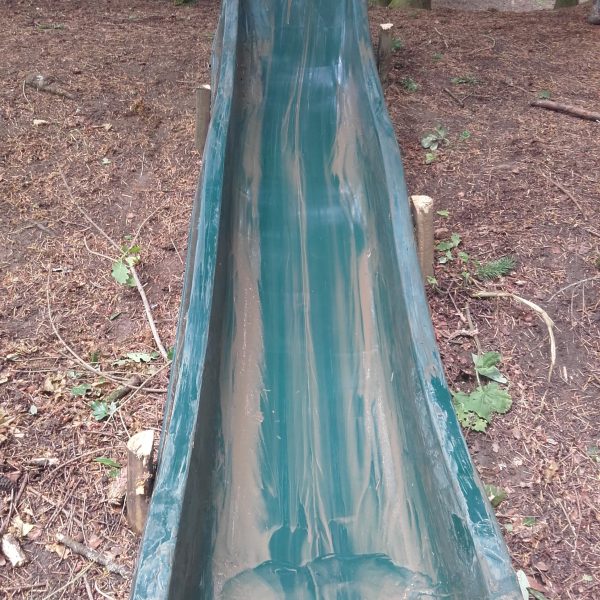
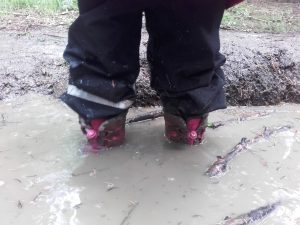
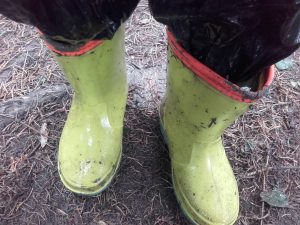
After lunch the children discovered the mud and had a great time in the play wood.
Another hot day on the farm saw the first class from St Andrews school come and experience Sandfield Farm. The children had the topic of habitats and how animals evolve. We started the morning walking through the wheat field which is showing the first signs of the seed head (wheat ear). Walking along the track, the children were asked to spot signs of badgers. We found three inactive badger holes and tracks running through the hedge. Later we saw the badger latrine and seeds in the badger poo!
You must be logged in to post a comment.