

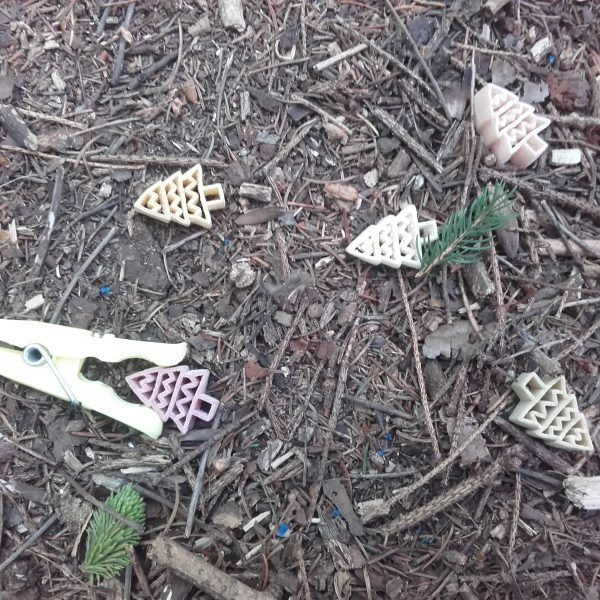
Another hot day on the farm saw the first class from St Andrews school come and experience Sandfield Farm. The children had the topic of habitats and how animals evolve. We started the morning walking through the wheat field which is showing the first signs of the seed head (wheat ear). Walking along the track, the children were asked to spot signs of badgers. We found three inactive badger holes and tracks running through the hedge. Later we saw the badger latrine and seeds in the badger poo!
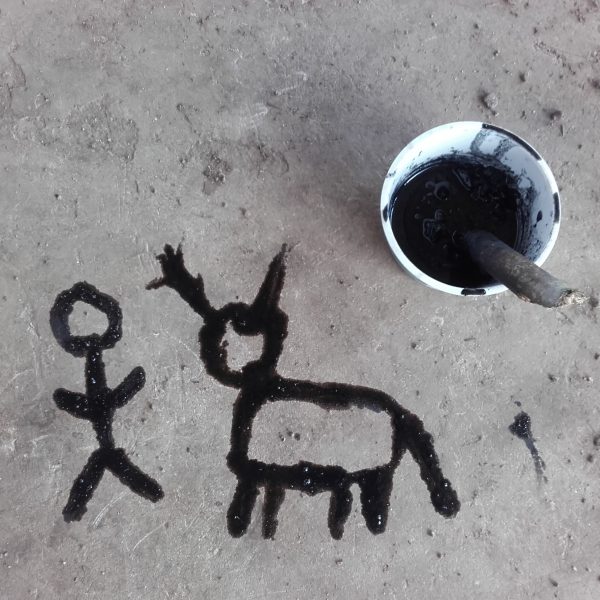
The weather was glorious today as Year 3 from Bengeworth Academy came to the farm to do their Stone age topic. After the health and safety talk the children told me lots of things about their topic and what they had been doing in school. I talked to them about Stone age food. It is amazing to think wheat has been feeding man for thousands of years. The children weren’t quite so keen on the idea of eating insects….
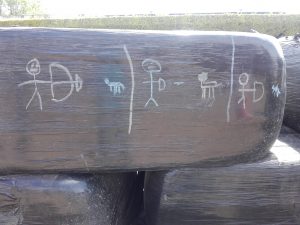
On the farm the children mixed charcoal from my camp fire with a little olive oil and then drew cave paintings on the concrete floor of the shed. After that the children were asked to draw a story board on the silage bales using chalk.
As the day was so lovely instead of making stone age round houses in the den building wood, we decided to be hunter-gatherers down by the pond. The first dragon flies and damsel flies of the year were flying around. The children were really engaged with finding the pond creatures.
After lunch the children had some very imaginative ideas in the playwood and were very disappointed to learn that the coach had arrived to take them back to school….

What a wet day! Well done to Year 4 of Sedgeberrow C of E First School who braved the elements and chose to stay on the farm in the rain rather than go back to school early. All the children left happy although with rather wet coats. Today the topic was Egypt, today’s rain was more related to the floods of the Nile Delta rather than the dry desert sand.
After the health and safety talk, the children told me all the facts they have been learning about Egypt. Mummification was an area of great interest. I then explained about two symbols of Egypt the flail and the crook which each have origins in agriculture. We also discussed the flooding of the Delta and how the farmers would work for the Pharaoh during the flooded months, then plough and sow the rich land left after the flood waters. The children learnt that agriculture was very important to the Egyptians and in particular wheat.
We then played a game of ‘beetle drive’ but rather than drawing a beetle the children drew six Egyptian objects; the flail, the crook, wheat, pyramid, death mask and the Delta. The children thought about whether their team won or lost the task and why. We then braved the rain and went into the play wood to build pyramids. Each group came up with very different approaches to the task but all groups worked very well together. Then over lunch the children dried out and then played a few more team games in the classroom before having a short play in the wood.
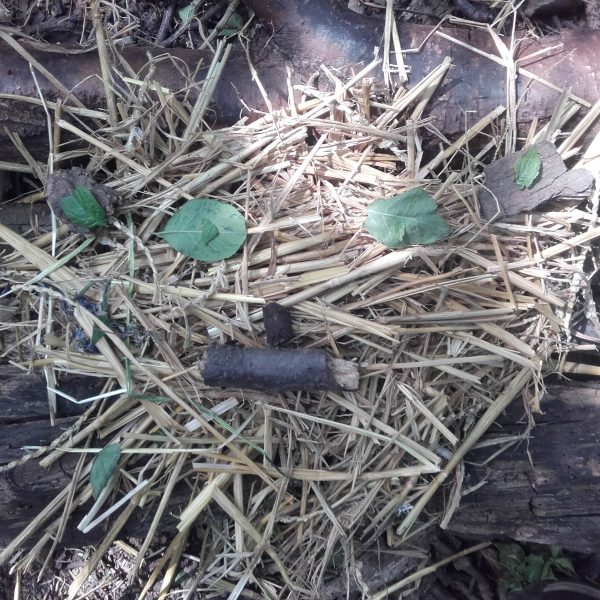
Year 3 from Sedgeberrow C of E First School spent the morning thinking about Romans, before playing in the playwood after lunch. The children started the topic by telling me about Roman roads and how the Romans invaded Britain. I explained to the children about the importance of Agriculture in Roman times and gave examples of Roman goddesses connected to Agriculture.
During the farm walk the children collected items from nature. Once inside the den building wood the children used their gathered items to design a roman mosaic tile and a lion which may have fought the gladiators. Some children also decided to make an elephant which Romans used in combat.
The weather was so lovely we were able to eat lunch on the my new picnic logs.
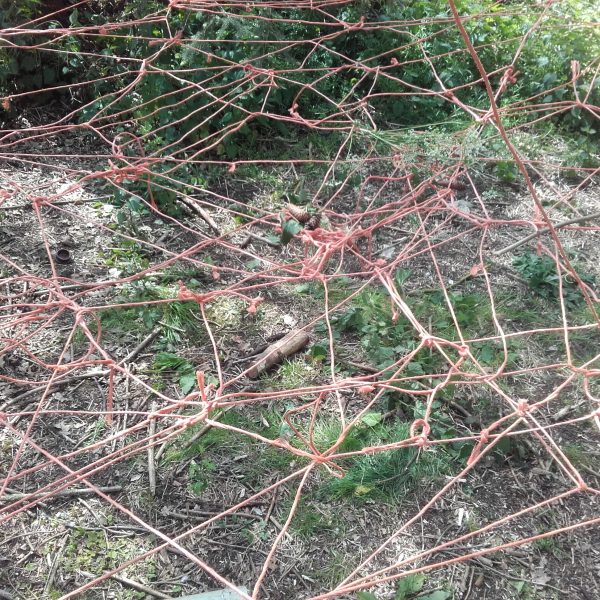
I had the most wonderful day with the delightful Year 4’s and 5’s from Cropthorne-with-Charlton CE First School. The first half of the morning was spent looking at Rainforests. The children thought about the height of the four different parts to the canopy in a Rainforest. We measured the very large ‘log’ outside the visitor room and calculated that it was well over 100 years old when it was cut down. We then took a walk on the farm to see the coppiced willow, estimated how tall the oak tree is and saw a real live example of plant succession in the nature area by the pond. After snack time the children completed a team activity based on Charlotte’s web.
You must be logged in to post a comment.